The futuristic concept of robotic companions, reminiscent of characters like K9 from Doctor Who or Goddard from Jimmy Neutron, is rapidly becoming a reality in the realm of corporate security. These advanced robot dogs, formally known as quadrupeds, are increasingly being deployed to safeguard some of the country’s most critical infrastructure: massive data centers that power artificial intelligence operations.
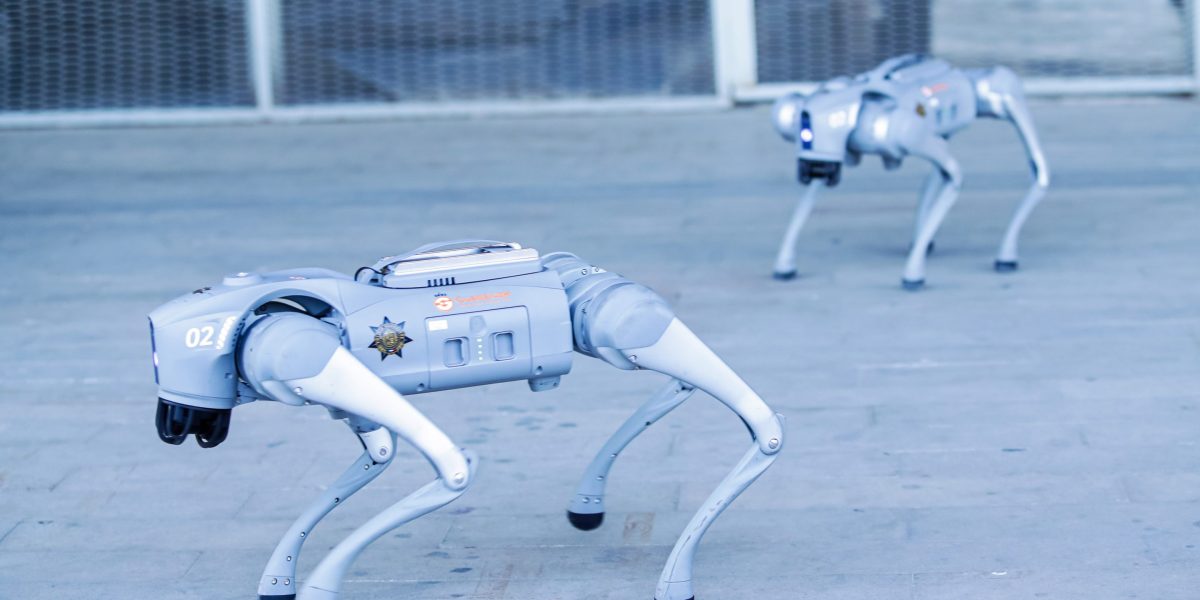
Photo: fortune.com
According to a report by Business Insider, these four-legged autonomous systems are in high demand from AI companies, particularly models like “Spot” from robotics pioneer Boston Dynamics. These units are engineered to navigate complex environments independently, identify and report security threats to human personnel, and maintain continuous video surveillance, offering a comprehensive and tireless security presence.
High Stakes, High-Tech Solutions for Critical Infrastructure
The surge in interest from data centers in the past year is hardly surprising, notes Merry Frayne, Senior Director of Product Management at Boston Dynamics. This spike aligns with an unprecedented investment in AI infrastructure, with companies collectively pouring nearly $700 billion into its development. This staggering sum approaches the gross domestic product of entire developed nations, such as Sweden.
The sheer scale of modern data centers further underscores the need for sophisticated security. Some facilities span areas equivalent to multiple football fields, with behemoths like Meta’s Hyperion expected to cover an expanse four times the size of Manhattan’s Central Park. Beyond their immense energy and water requirements, the vastness of these operations makes traditional security prohibitively expensive, compelling firms to explore cutting-edge alternatives.
While a single Spot quadruped can carry a price tag ranging from $175,000 to $300,000, depending on client specifications, Boston Dynamics projects that these robotic assets can offset their initial investment within just two years through operational efficiencies and enhanced security capabilities.
Beyond Patrol: Multifaceted Roles for Robotic Guardians
The utility of these robotic dogs extends far beyond simple perimeter patrols. Data center clients are leveraging quadrupeds for critical industrial inspection, detailed site mapping, and rigorous construction monitoring, Frayne revealed to Business Insider. These advanced functions enable facility managers to quickly identify potential hazards, such as water leaks or pooling, before they escalate. Boston Dynamics highlights Spot’s “360° perception and athletic intelligence” as key features enabling these diverse applications.
Quadrupeds like Spot are not entirely new to the security landscape, having already found applications in public safety and law enforcement. Another prominent robotics firm, Ghost Robotics, markets its quadruped systems for optimizing inspections and safety surveillance on construction sites. The company also promotes the robots for critical reconnaissance, intelligence gathering, and surveillance missions in military contexts, showcasing their versatility across various demanding environments.
The Dawn of the Robotics Era: A Look Ahead
Many technology visionaries foresee the current AI revolution as a catalyst for a new era of robotics, with some speculating that robots could eventually surpass human populations. While the current reality is still a distance from such predictions, growth projections are significant. A Deloitte research report, “AI for industrial robotics, humanoid robots, and drones,” indicated that annual sales of new industrial robots have stabilized at approximately 500,000 units since 2021.
However, the long-term outlook is for substantial expansion. Deloitte forecasts that robot shipments will double to 1 million units by 2030, generating revenues of $21 billion. This projection then escalates dramatically to a colossal $5 trillion by 2050.

Photo: fortune.com
Zak Kidd, founder of AI company AskHumans, emphasized the distinct impact of AI versus robotics in a recent interview with Fortune. While AI is largely seen as an augmentation of knowledge-based professions, he believes that humanoid robotics holds the potential to directly replace manual labor jobs.
“I see AI as an augmentation of knowledge work,” Kidd stated. “But I see robotics, humanoid robotics, as a replacement for manual work.”

Photo: fortune.com

Photo: fortune.com

Photo: fortune.com
This evolving landscape suggests a future where autonomous machines play increasingly integral roles across various industries, from safeguarding vital data infrastructure to transforming labor markets globally.