Recent analysis of images captured by NASA’s Mars rovers has led one scientist to propose a startling hypothesis: the presence of complex, animal-like life forms on the Red Planet, resembling insects and reptiles found on Earth. This raises compelling questions about the true extent of Martian biodiversity.
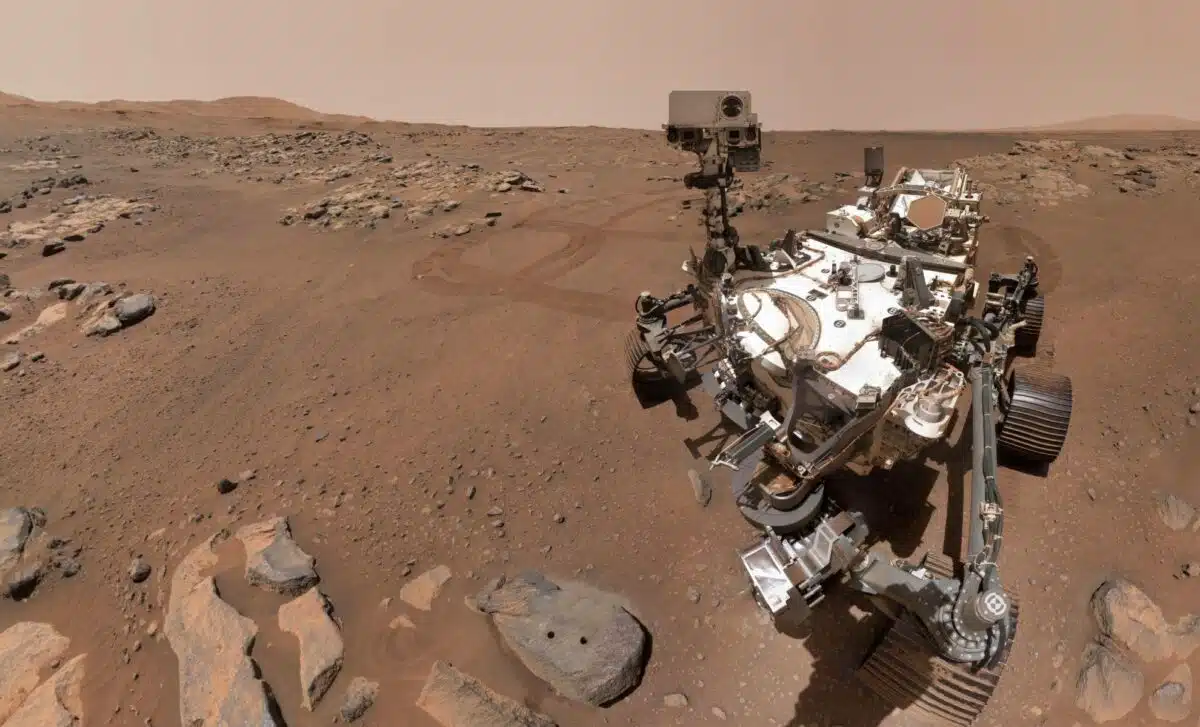
Photo: thedailygalaxy-greatdiscoverieschannel.com
Professor William Romoser of Ohio University presented a study based on photographs from NASA’s Mars rovers, particularly the Curiosity mission. His research diverges from traditional astrobiological approaches that primarily seek chemical biomarkers or fossilized microbial evidence. Instead, Romoser’s detailed examination of various rover images led him to identify what he interprets as distinct insect-like and reptile-like organisms, suggesting an entirely different scale of life on Mars than previously considered possible. The features observed, he contends, bear striking anatomical similarities to Earth-based arthropods and reptiles.
Putative Insectoid Organisms Detected
Within the extensive photographic archives from the Curiosity rover, Professor Romoser asserts he has distinguished multiple insect-like entities, depicted both in motion and at rest. These putative creatures, some of which he colloquially terms ‘bees,’ reportedly exhibit characteristics akin to terrestrial insects, such as articulated limbs, segmented torsos, and wings. One notable image reportedly shows an organism executing a complex aerial maneuver, descending sharply before stabilizing its flight, mirroring behaviors observed in Earth’s winged insects. Romoser remarked on the apparent diversity, stating, ‘The ‘bees’ appear to vary in size and type. Several characteristic insect/arthropod anatomical features were identifiable, not all on the same individual, but as a mosaic among individuals.’ Furthermore, the analysis highlighted anatomical details such as compound eyes and specialized appendages, aligning with the general morphology of arthropods. The researcher also suggested that these insectoid forms seemed to be utilizing natural shelters like caves, subterranean burrows, and other constructed formations for nesting or protection.
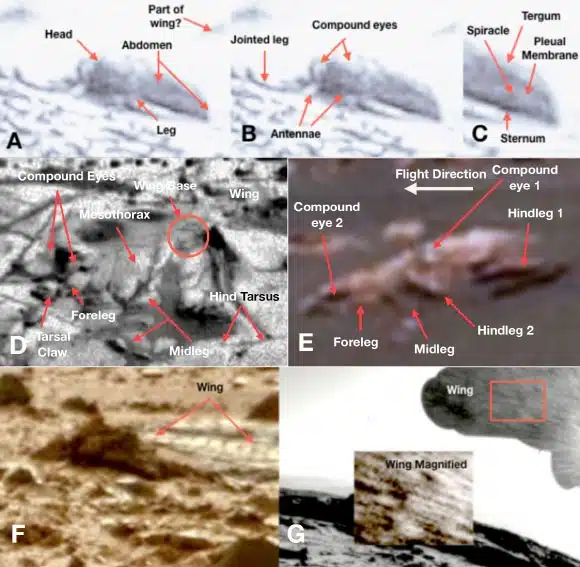
Photo: thedailygalaxy-greatdiscoverieschannel.com
Indications of Reptilian Forms
Beyond the insectoid observations, Professor Romoser’s investigation also yielded what he interprets as fossilized or living reptile-like entities within the Mars rover imagery. A particularly compelling specimen reportedly resembles an Eastern King Snake, featuring a discernible head and symmetrically arranged dotted patterns. This presumed reptilian form also appears to possess a large, gape-capable mouth, reinforcing the notion that such organisms either previously inhabited or currently exist on the Martian surface. The perceived reptilian structures exhibit bilateral symmetry and anatomical features strikingly similar to their terrestrial counterparts, leading Romoser to postulate that Mars could host, or once hosted, similar complex life. Intriguingly, some images even suggest predatory interactions, with the larger reptile-like entities seemingly preying upon the smaller insect-like organisms.
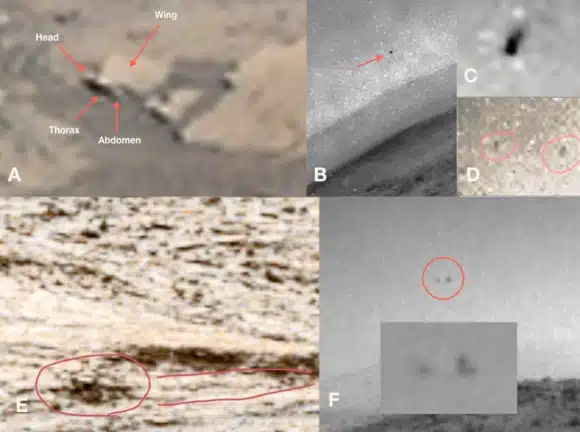
Photo: thedailygalaxy-greatdiscoverieschannel.com
A New Frontier in Astrobiology
Professor Romoser posits that his groundbreaking interpretations carry significant implications for the future of astrobiological study. He suggests that the potential discovery of arthropod and reptile-like organisms extraterrestrially could pave the way for entirely new scientific disciplines, proposing the emergence of ‘astroentomology’ and ‘astroherpetology’ as crucial specializations within astrobiology. When Romoser first presented these findings in 2019 at the National Meeting of the Entomological Society of America, his work garnered a predictable mix of keen interest and considerable skepticism. Regardless of the ongoing debate or eventual consensus, his research undeniably stimulates broader discussions about the nature of life on Mars, challenging conventional perspectives and opening avenues for considering not just microbial existence, but potentially complex, macroscopic organisms on other planets.
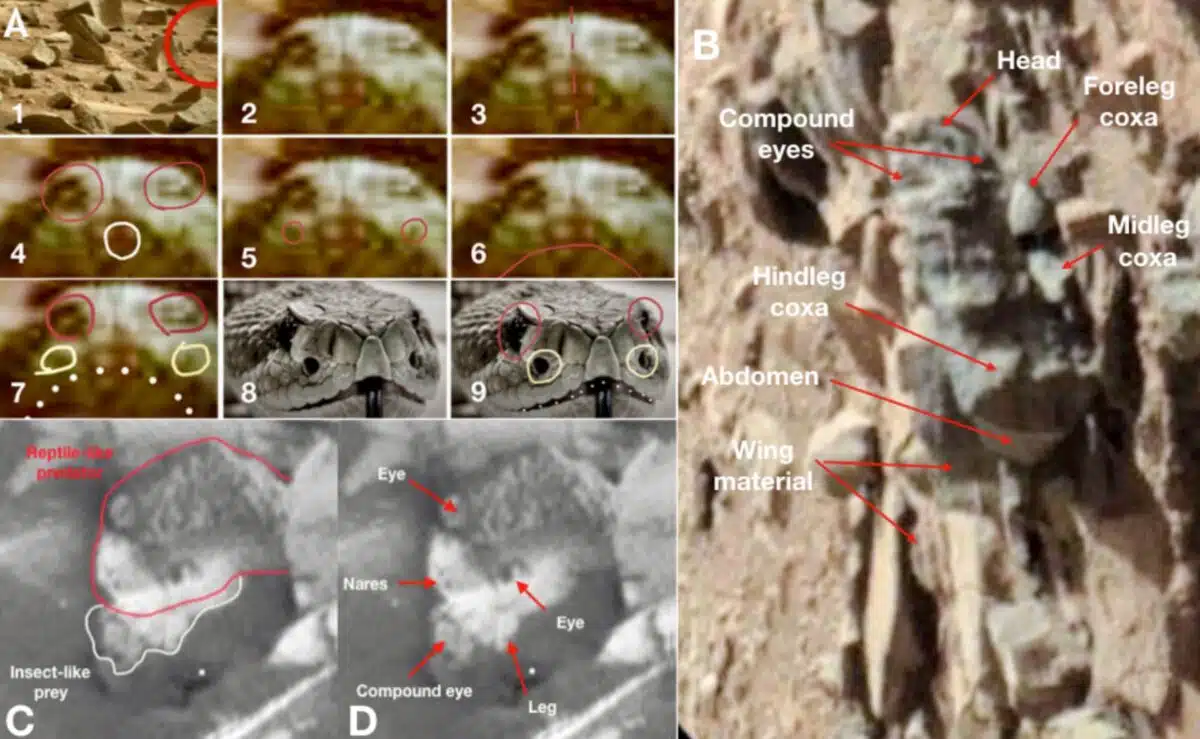
Photo: thedailygalaxy-greatdiscoverieschannel.com