
What once seemed confined to the pages of science fiction is now a reality: advanced robotic canines are being deployed to secure some of the nation’s most crucial data infrastructure. These sophisticated four-legged robots, known as quadrupeds, are patrolling sprawling data centers across the country, facilities vital for powering the booming artificial intelligence industry.
Robotics firms, including Boston Dynamics, manufacturer of the renowned ‘Spot’ quadruped, are experiencing a significant surge in demand from AI companies. These robotic systems boast autonomous navigation capabilities, the ability to identify and report security threats, and provide continuous video surveillance, offering a futuristic solution to modern security challenges.
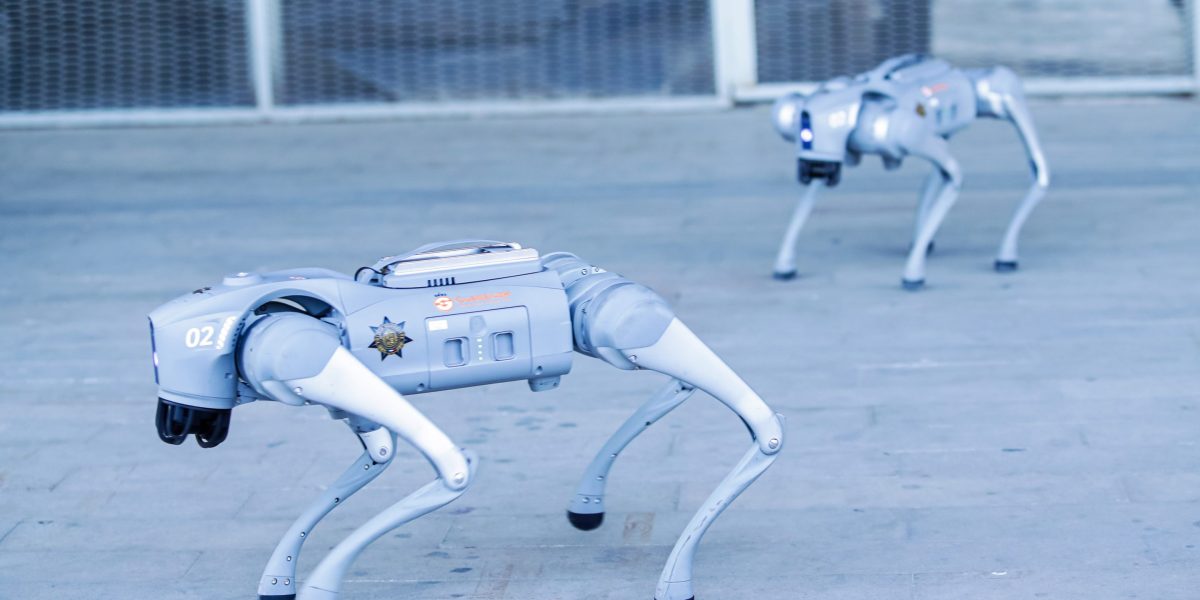
Photo: fortune.com
The High-Tech Sentinels of Digital Fortresses
Merry Frayne, senior director of product management at Boston Dynamics, revealed to Business Insider a substantial increase in interest from data centers over the past year. This uptick is unsurprising, she noted, given the colossal investments pouring into the AI sector. Companies are dedicating nearly $700 billion to AI infrastructure development, a sum comparable to the gross domestic product of some developed nations.
The sheer scale of these data centers, with some rivaling multiple football fields in size—like Meta’s Hyperion, projected to be four times the size of Manhattan’s Central Park—presents immense security challenges. Beyond their vast energy and water requirements, the cost of round-the-clock human security for such expansive operations is prompting firms to explore innovative, automated alternatives.
While a single Spot robot can carry a price tag ranging from $175,000 to $300,000, depending on client specifications, Boston Dynamics estimates that these robotic guardians could offset their initial investment within two years. This demonstrates a compelling economic argument for their adoption despite the significant upfront cost.
Beyond Security: Multifunctional Robotic Applications
The utility of these quadruped robots extends far beyond perimeter patrols. Frayne indicated that data center clients are leveraging these machines for a variety of industrial tasks, including detailed inspections, precise site mapping, and continuous construction monitoring. Such capabilities empower facility managers to swiftly identify and address potential hazards like standing water or leaks, enhancing operational safety and efficiency.
Quadrupeds like Boston Dynamics’ Spot are not entirely new to the scene, having previously been adopted in sectors such as public safety and law enforcement. Another prominent robotics company, Ghost Robotics, similarly markets its quadrupeds as robust business solutions for construction site inspections and safety monitoring, in addition to specialized applications in military reconnaissance, intelligence, and surveillance.
Paving the Way for a Robotic Future
The current AI revolution is widely anticipated to usher in a new era for robotics, with some industry visionaries predicting a future where robots could outnumber humans. While this grand vision may still be some time away, the trajectory is clear. A Deloitte research report focusing on ‘AI for industrial robotics, humanoid robots, and drones’ highlighted that annual sales of new industrial robots have remained steady since 2021, around 500,000 units.
However, long-term projections forecast substantial growth, with robot shipments expected to double to 1 million by 2030, generating revenues of $21 billion. This figure is projected to skyrocket to an astounding $5 trillion by 2050. These statistics underscore the increasing integration of robotics into various facets of industry and daily life.
In a recent interview with Fortune, Zak Kidd, founder of the AI company AskHumans, articulated a key distinction in the impact of emerging technologies. He suggested that while artificial intelligence primarily augments knowledge-based work, humanoid robotics is poised to directly replace jobs requiring physical labor. This perspective highlights the transformative potential of these robotic advancements not just in niche security roles, but across the broader employment landscape.

Photo: fortune.com

Photo: fortune.com

Photo: fortune.com

Photo: fortune.com

Photo: fortune.com