Photo: thedailygalaxy-greatdiscoverieschannel.com
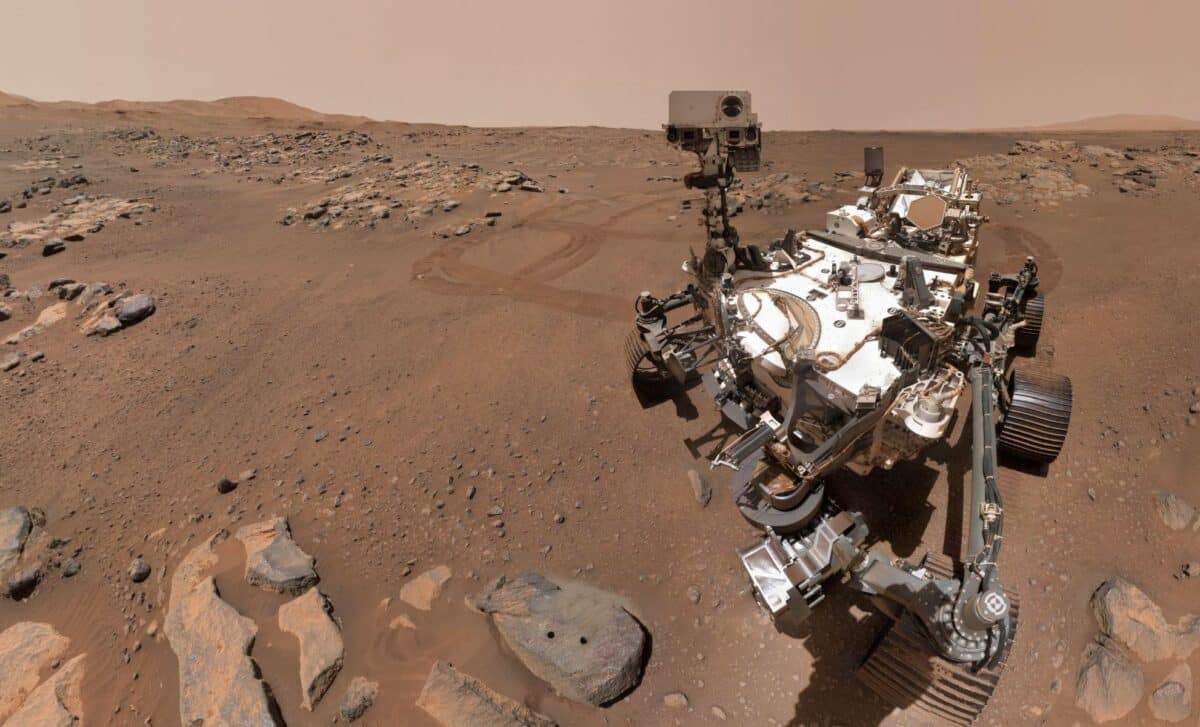
Recent analyses of images captured by NASA’s Mars rovers have ignited a fascinating debate, suggesting the potential existence of complex life forms on the Red Planet. Ohio University Professor William Romoser has put forward a compelling theory, identifying what he interprets as insect- and reptile-like organisms within these extraterrestrial photographs. This unexpected proposition challenges conventional approaches to astrobiology, which traditionally prioritize the search for microbial fossils or chemical signatures as indicators of Martian life.

Photo: thedailygalaxy-greatdiscoverieschannel.com
Professor Romoser’s research, based on a meticulous examination of visuals from the Curiosity rover, proposes that certain structures within the Martian landscape bear a striking resemblance to arthropods and reptiles found on Earth. This theory opens a new avenue in the quest to understand whether Mars harbors life that is not only present but also remarkably similar to terrestrial fauna.
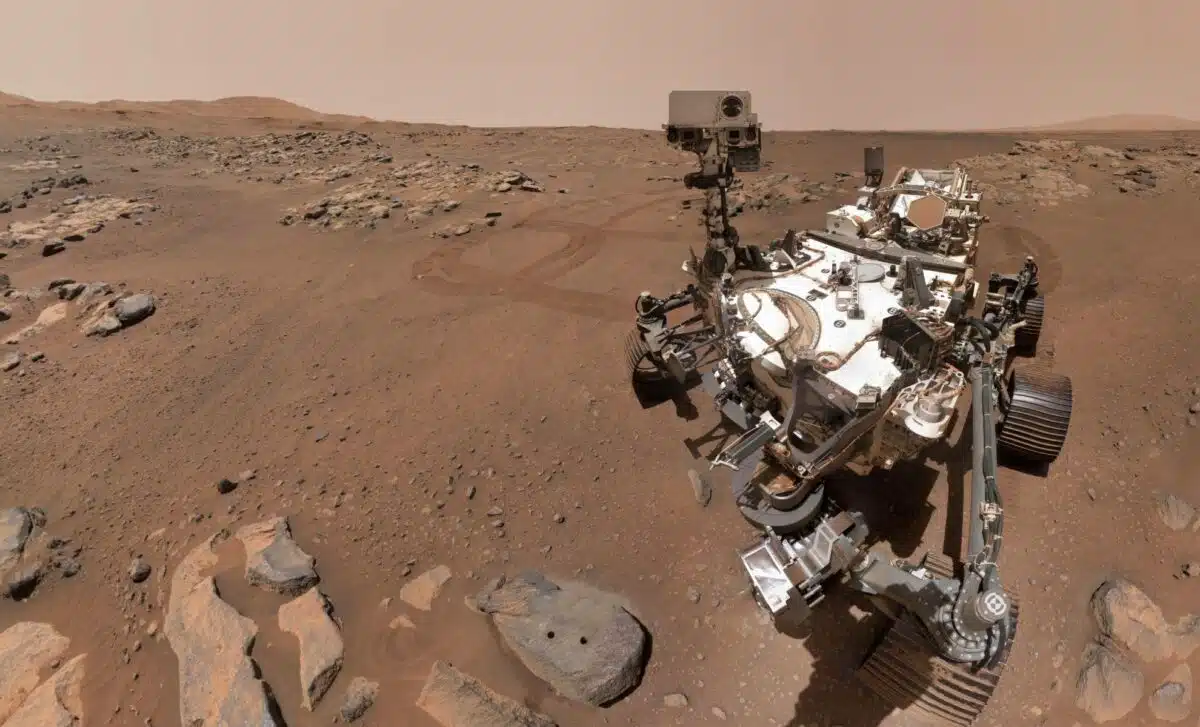
Photo: thedailygalaxy-greatdiscoverieschannel.com
Unusual Sightings: Insect-Like Organisms on Mars
Delving into the trove of data from NASA’s Curiosity rover, Professor Romoser’s study highlights what he describes as multiple insect-like creatures. These purported organisms, which he colloquially refers to as “bees,” appear in various states, some seemingly in flight while others are at rest. The professor points to distinct features such as segmented bodies, apparent wings, and jointed appendages, consistent with characteristics observed in terrestrial insects. He even details one instance where a creature appears to be performing an acrobatic dive before leveling off, a maneuver reminiscent of insects on Earth.
The observed anatomical structures, including what Romoser suggests are compound eyes and specialized limbs, align with the broader classification of arthropods, a diverse phylum that encompasses insects. Furthermore, his analysis indicates that these insect-like forms may be utilizing the Martian environment for shelter, with observations suggesting they inhabit caves, burrows beneath the surface, and other specialized structures.
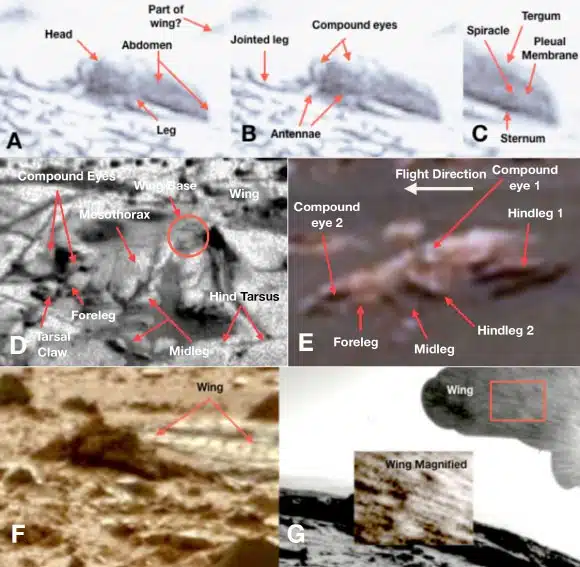
Photo: thedailygalaxy-greatdiscoverieschannel.com
Possible Reptilian Life Forms Detected
Beyond the insect-like observations, Romoser’s investigation extends to what he believes are fossilized reptile-like entities within the rover imagery. A notable example he cites is a specimen that shares characteristics with an Eastern King Snake, distinguishable by a prominent head and symmetrical punctate markings. The proposed fossilized creature also exhibits what appears to be a large, gaping mouth, lending further credence to the hypothesis that organisms resembling Earth’s reptiles may have once thrived, or perhaps still exist, on Mars.
These detected reptile-like forms reportedly display symmetry and anatomical features that draw parallels to their terrestrial counterparts. Such findings have led Romoser to advance the bold proposition that Mars may have previously sustained, or could currently sustain, life forms that mirror those found on Earth. Intriguingly, some images even suggest interactions between these hypothesized life forms, with the reptile-like creatures seemingly preying on the insect-like organisms.
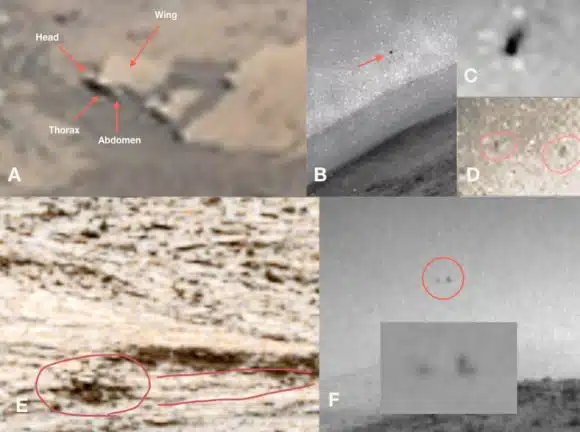
Photo: thedailygalaxy-greatdiscoverieschannel.com
Redefining Astrobiology: New Fields of Study?
The potential implications of Professor Romoser’s controversial research are far-reaching, potentially reshaping the field of astrobiology. He suggests that if evidence for arthropod and reptile-like organisms beyond Earth gains wider acceptance, it could pave the way for entirely new disciplines, such as “astroentomology” and “astroherpetology.”
First presented in 2019 at the National Meeting of the Entomological Society of America, Romoser’s findings have naturally generated both considerable interest and a degree of scientific skepticism. Regardless of the ultimate consensus, his work undeniably sparks vital conversations about the nature of life beyond our planet and prompts a re-evaluation of the types of organisms we might expect to encounter in the vastness of space, moving beyond the traditional focus on microbial existence.
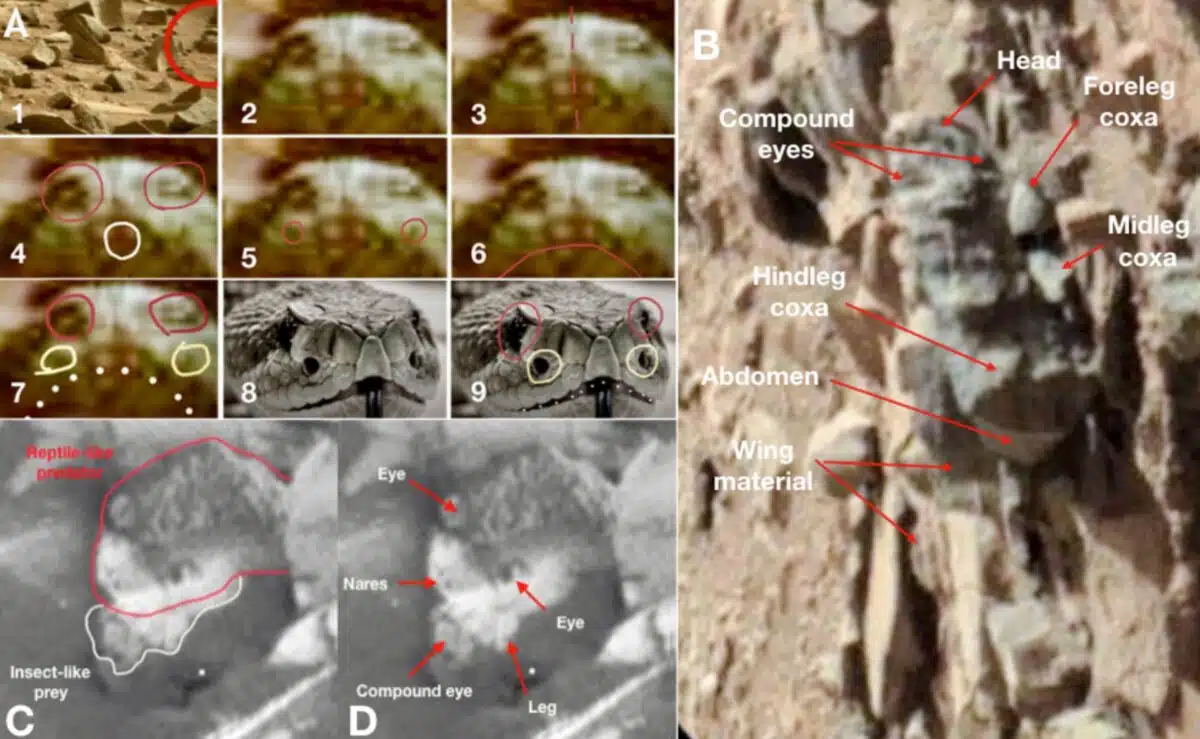
Photo: thedailygalaxy-greatdiscoverieschannel.com