
A cornerstone of English history, the dramatic narrative of King Harold Godwinson’s rapid dash across England to confront William the Conqueror in 1066, is being fundamentally challenged by groundbreaking new research. Far from a desperate overland march, fresh insights suggest that a significant portion of Harold’s journey to the Battle of Hastings was undertaken by sea, painting a picture of a more sophisticated and coordinated military strategy.
This re-evaluation, spearheaded by scholars at the University of East Anglia (UEA), promises to alter how the pivotal Norman Conquest is taught, displayed in museums, and understood in public consciousness. The timing is particularly poignant, as the historic Bayeux Tapestry prepares for its much-anticipated display at the British Museum.
Revisiting the Anglo-Saxon Chronicle
For over two centuries, historians have largely relied on a misinterpretation of the Anglo-Saxon Chronicle, a crucial primary source for early English history. The prevailing belief was that King Harold disbanded his fleet in early September 1066. This interpretation stemmed from the phrase that his ships ‘came home,’ which Victorian historians took to mean the navy was deactivated, thus necessitating a forced march of his army south from Stamford Bridge in Yorkshire.
Professor Tom Licence, a specialist in Medieval History and Literature at UEA, argues convincingly against this long-held view. His comprehensive re-examination indicates that the fleet merely returned to its operational base in London, remaining an active component of Harold’s military assets. Professor Licence noted, “I noticed multiple contemporary writers referring to Harold’s fleet, while modern historians were dismissing those references or trying to explain them away. I checked the evidence for him having sent the fleet home and found that it was just a misunderstanding. I went looking in the sources for evidence of a forced march and found there wasn’t any.”
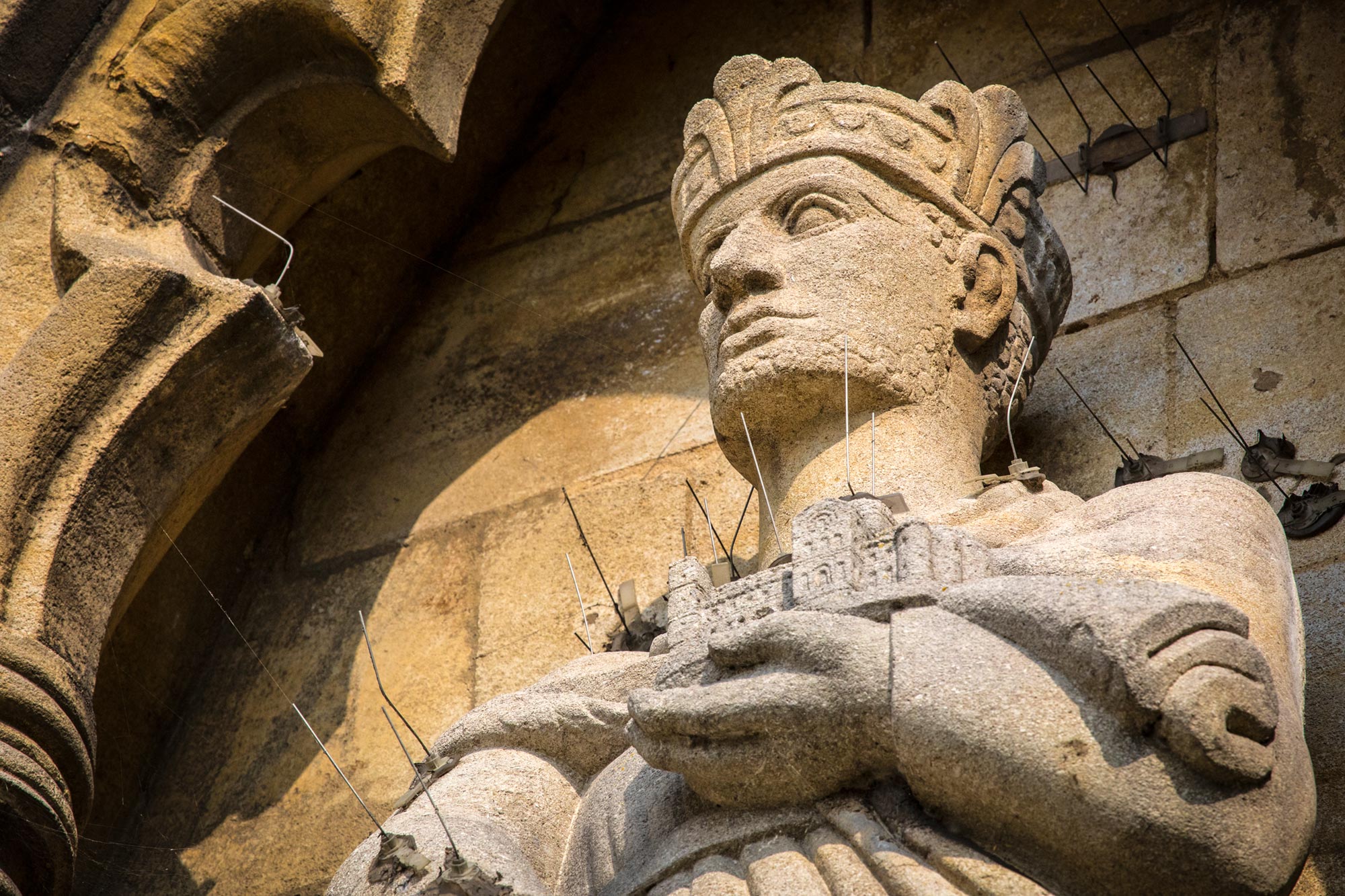
Photo: scitechdaily.com
A Master Strategist, Not a Hasty Commander
The revised account portrays King Harold not as an exhausted, reactive leader, but as a shrewd strategist employing a comprehensive land-sea military operation. This challenges the long-standing image of a ‘heroic march,’ which Professor Licence describes as a “Victorian invention that has shaped our understanding, or misunderstanding, of 1066 for far too long.”
Historical documents, previously perplexing to historians who believed Harold lacked a navy, describe him dispatching hundreds of ships to engage Duke William after the Norman landing. Professor Licence clarifies, “Harold’s ‘missing’ fleet was used to defend the south coast, then to support his campaign against Harald Hardrada, and finally to rush back south after the Battle of Stamford Bridge ready to face Duke William of Normandy.” This coordinated approach suggests that Harold was leveraging England’s naval capabilities for a multi-front defense.
Professor Michael Lewis, Head of the Portable Antiquities Scheme at the British Museum, underscored the research’s importance. “With the Bayeux Tapestry coming to the British Museum later this year, Prof Tom Licence’s research shows there is much still to be learned about the events of 1066,” he remarked. “It is clearly a fascinating discovery that following the Battle of Stamford Bridge, Harold took an easier, more logical, trip south by ship to meet Duke William in battle, rather than a long trek overland, as has long been supposed.”
{{IMAGE_2}}
Dispelling the Myth of the Implausible March
The research dismantles the notion of a 200-mile forced march, pointing out that no contemporary records support such an arduous journey. This narrative, popularized by Victorian historian Edward Augustus Freeman, is seen as implausible given the conditions of medieval roads and the necessity of troop recovery after battle.
The Fleet Remained Active
Contrary to prior belief, Harold did not dismiss his fleet. The Chronicle states he returned to London ‘off ship,’ indicating his naval forces were operational and essential to his movements.
The March: A Victorian Fabrication
Transporting an army by sea from the Humber to London would have been significantly faster and safer than an overland trek. Comparisons with later military logistics, such as American Civil War troops covering only about 100 miles in five days under extreme duress, highlight the sheer impossibility of Harold’s army covering nearly 200 miles in ten days and then immediately engaging in another major battle.
Professor Licence stated, “Harold’s weary, unmounted men covering nearly 200 miles in ten days and then continuing straight to the Hastings peninsula is implausible given medieval roads and the aftermath of battle. Only a mad general would have sent all his men on foot in this way if ship transports were available.” This new perspective vindicates Harold, whose leadership was previously criticized for “reckless and impulsive haste.”
Naval Action Against Hardrada and William
The Old English term ‘lið’ in the Chronicle, describing Harold’s forces at Tadcaster, is often translated as ‘fleet,’ suggesting a combined naval and land assault against Harald Hardrada. Furthermore, accounts of Harold dispatching hundreds of ships south after William’s landing indicate an intended naval pincer movement, aiming to trap the Norman invaders. While this strategy may have been executed too late to significantly alter the outcome, it suggests a more complex plan than previously understood.
Evidence of a Naval Clash
The study also re-examines mentions in the Domesday Book and the Annales Altahenses, which hint at a possible English sea engagement in early October 1066. These references, previously ambiguous, now gain credibility, suggesting a confrontation between Harold’s fleet and William’s ships near Hastings, adding another layer to the lead-up to the legendary battle.
This reinterpretation, presented by Professor Tom Licence at the University of Oxford, challenges a long-standing narrative and offers a more nuanced view of one of England’s most famous conflicts.
{{IMAGE_3}}