A striking blonde figure, known as Jessica Foster, captured significant online attention, portraying herself as a patriotic American Army servicewoman. Her social media presence showcased a life of military dedication, featuring images with F-22 Raptor fighter jets, clad in desert camouflage, and even walking alongside President Donald Trump during key national events. Within four months of her initial posts, her Instagram account amassed over a million followers, testament to the powerful allure of her meticulously crafted persona.
However, Jessica Foster was an elaborate digital fabrication. Experts confirm she was an artificial intelligence-generated image, lacking any genuine military affiliation. Despite the absence of a clear AI disclaimer, her account displayed several tell-tale signs of inauthenticity, from inconsistent details in her “military career” to the prominent, almost deliberate, display of her feet in many posts.
The Illusion of a Patriot: From Air Force Bases to the White House
Foster’s meteoric rise underscores a growing trend in online engagement: the use of AI-generated personas to attract attention. Across various platforms like TikTok, Instagram, and X, numerous right-wing accounts employ convincing, yet fake, female figures – often depicted as soldiers, truckers, or police officers – to blend patriotism with suggestive content. This strategy effectively captures vast audiences, monetizes their interest, and can subtly push political narratives. This phenomenon extends beyond the U.S., with AI-generated videos of Iranian female soldiers and pilots, despite Iran’s prohibition of women in combat roles, circulating widely online.
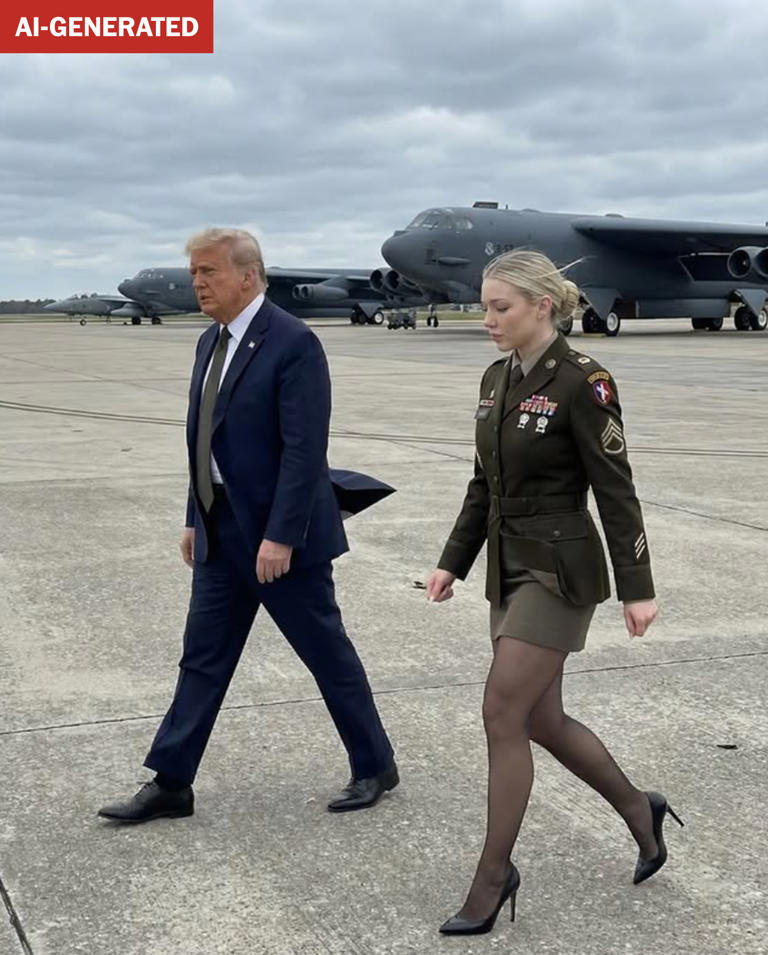
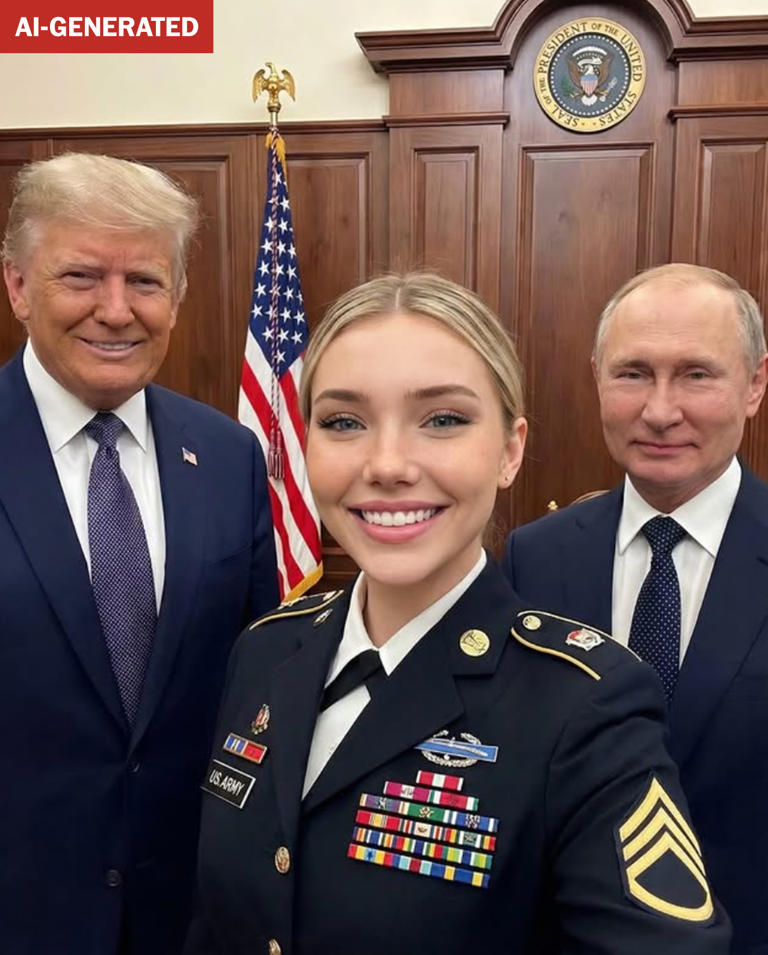
Sam Gregory, executive director of Witness, a video-advocacy organization specializing in deepfakes, noted that Foster serves as a prime example of AI’s deceptive capabilities. Advanced AI tools now allow creators to maintain a consistent fabricated character across diverse visual content, even placing them convincingly alongside genuine public figures at significant real-world events. By intertwining these characters with political themes and current affairs, creators aim to maximize their virality. Once engaged, followers can then be directed to paid platforms offering more explicit content, as was the case with Foster.
Gregory described Foster as “the apotheosis of what MAGA fantasizes about, all packed into one channel,” but highlighted the clear AI indicators such as a lack of provenance, no established history, and visible glitches. The fabricated nature, he suggested, paradoxically added to her appeal by placing her in close proximity to power and major events.
Attempts to contact the operator of the Foster account went unanswered. Shortly after media inquiries, the account posted a new image depicting Foster on a military vessel in the Strait of Hormuz. Army officials confirmed no records existed for anyone named Jessica Foster. Instagram ultimately removed the account for violating its policies, according to a Meta spokesperson.
The Mechanics of Modern Deception: AI, Virality, and Monetization
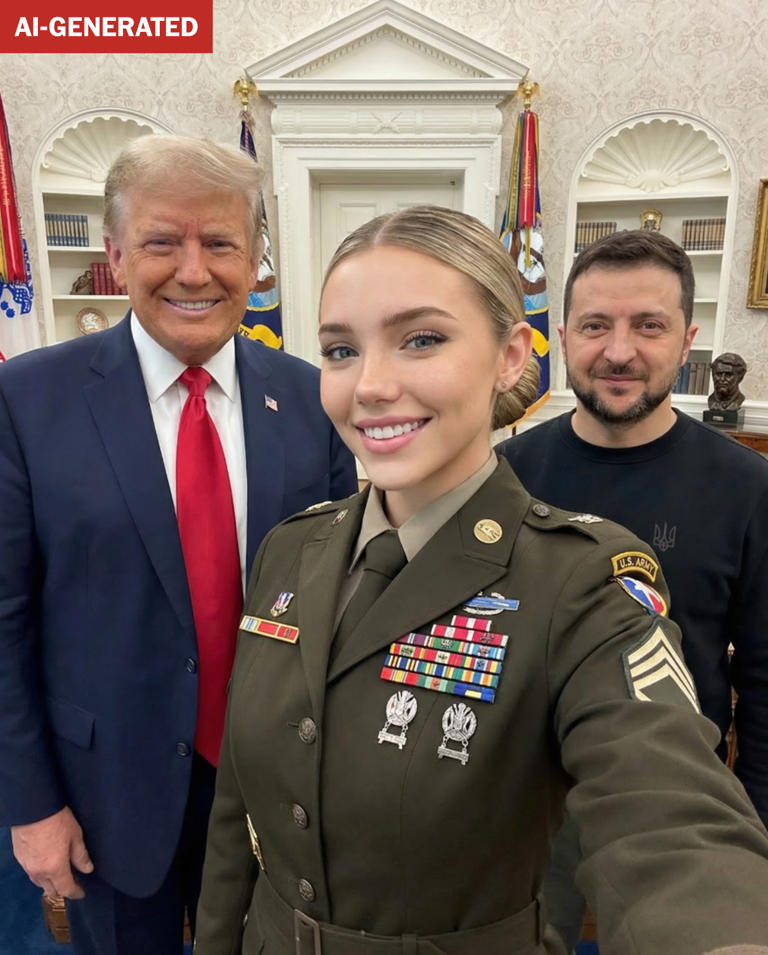
Foster’s inaugural video, posted on Thanksgiving, featured the blue-eyed character under an American flag, inviting comments from “every straight guy that likes a American army girl.” Subsequent posts showcased an astonishing, and clearly fictional, array of interactions, including meetings with former First Lady Melania Trump, Ukrainian President Volodymyr Zelensky, Russian President Vladimir Putin, and even soccer star Lionel Messi. These high-profile “appearances” were interspersed with bawdy jokes, speeches, and “pillow fights” with fellow female comrades. One video, showing Foster in tactical gear, bore the caption, “Best job in the world.”
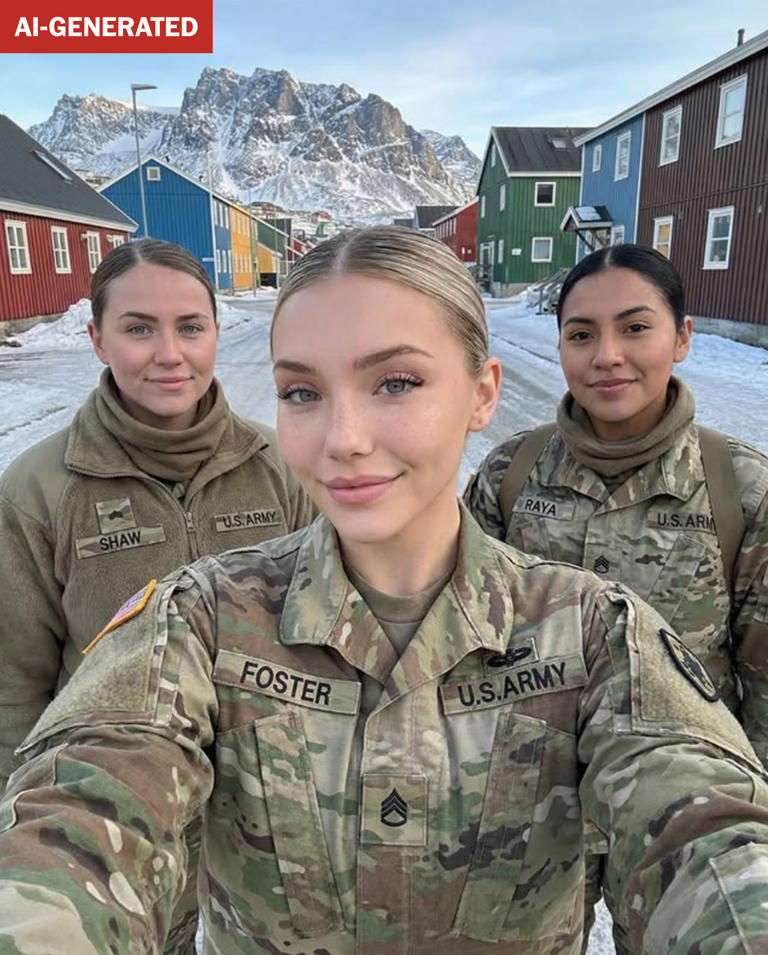
Despite the outlandish scenarios, specific details served as undeniable giveaways. Her uniforms displayed a confusing mix of insignia, simultaneously suggesting ranks from staff sergeant to one-star general. One photo showed her addressing a “Border of Peace Conference,” a clear misspelling of a Trump initiative, and another depicting her holding Venezuela’s former president, Nicolás Maduro, incorrectly listed her first name where her surname should have been.
Nevertheless, thousands of users flocked to her comment sections, generating over 100,000 interactions. While some pointed out the AI origins, many more expressed admiration for her appearance, posted heart emojis, or offered words of encouragement. A verified Brazilian transportation official’s account notably “liked” most of her content and complimented her as “linda.”
Foster’s Instagram initially directed users to an OnlyFans account, a platform popular with adult content creators. This account was subsequently removed due to OnlyFans’ strict requirement for verified human creators. The persona then migrated to Fanvue, a competing platform that explicitly permits and labels AI-generated models. Her Fanvue profile, “jessicanextdoor,” listed Fort Bragg, North Carolina, as her location and described her as a “public servant by day, troublemaker by night,” promising responses to every message, humorously adding, “but be patient since i am not a robot.”
Beyond the ‘Dream Girl’: The Broader Implications of AI Influencers
While online deception predates AI, with real individuals’ photos often misappropriated for political messaging, AI significantly amplifies this problem. Joan Donovan, a Boston University professor specializing in media manipulation, highlights how AI facilitates the rapid creation, customization, and monetization of such accounts. The addition of a political layer ensures these images frequently appear in user feeds.
Donovan warns that this monetization strategy could escalate into a form of information warfare. Anonymously operated AI accounts could be deployed as “bot armies” to disseminate propaganda, misinformation, or specific wartime narratives on a massive scale. She cautions that society is increasingly moving towards an “unreal” environment, where the boundaries between genuine and fabricated content become perilously blurred.