New data suggests that a significant chunk of Tesla Cybertruck sales in late 2025 didn’t come from everyday buyers — but from within Elon Musk’s own business empire.
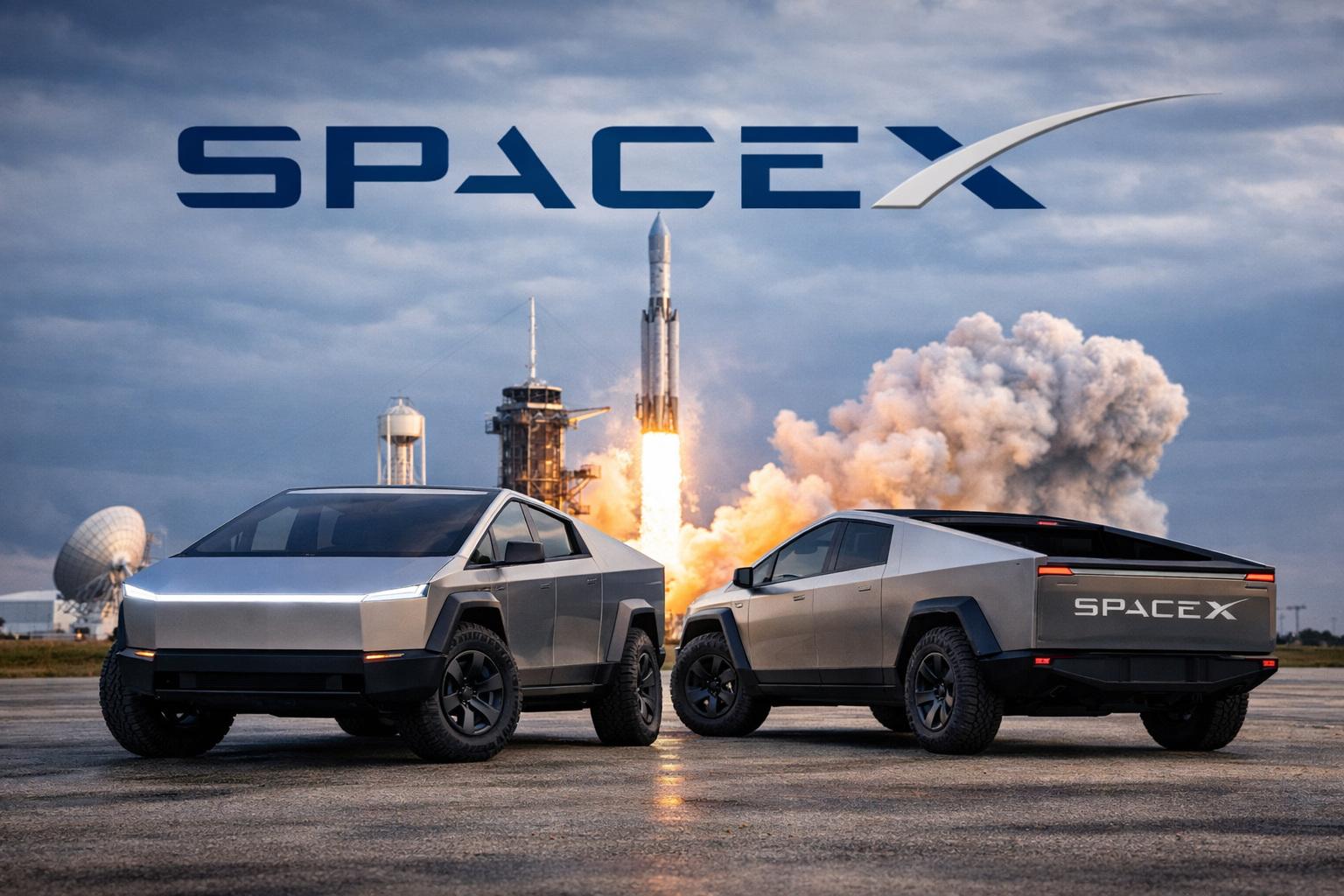
According to vehicle registration figures from S&P Global Mobility, SpaceX purchased 1,279 Cybertrucks in Q4 2025, accounting for over 18% of all Cybertrucks registered in the United States during that period.
That made SpaceX the single largest identifiable customer for Tesla’s futuristic electric pickup.
Musk’s Companies Drove Nearly 1 in 5 Sales
When you include other Musk-led ventures like xAI, Neuralink, and The Boring Company, the total rises to 1,339 vehicles, or roughly 19% of all Cybertruck registrations in Q4.
In simple terms, nearly one out of every five Cybertrucks sold in the U.S. during that quarter went to companies controlled by Elon Musk.
What Happens Without These Internal Purchases?
Strip out those internal sales, and the picture looks very different.
Analysts estimate that Cybertruck demand would have appeared dramatically weaker — with registrations potentially dropping by more than half on a year-over-year basis.
This has fueled concerns that Tesla may be relying on internal demand to support headline sales numbers.
Demand Struggles Are Becoming Clear
The data comes at a time when Cybertruck momentum appears to be slowing:
- Tesla sold just over 7,000 units in Q4 2025 in the U.S.
- Total 2025 sales were around 20,000 units, far below earlier expectations
- Early 2026 deliveries dropped further, marking one of the weakest quarters since launch
This is a far cry from Elon Musk’s original projection of 250,000 units annually.
Why Is SpaceX Buying So Many?
There is a practical explanation — at least in part.
Tesla has previously indicated that some of these vehicles are being used to replace internal fleets at SpaceX facilities. Photos and reports have shown large batches of Cybertrucks delivered to company sites.
Still, critics argue that the scale of these purchases suggests something more than routine fleet upgrades.
The Bigger Picture
The Cybertruck launched with massive hype, but the latest data suggests demand hasn’t kept pace with expectations.
With nearly 20% of Q4 sales tied to Musk-controlled companies, the question now is whether Tesla can generate enough independent, real-world demand to sustain the model long-term — without relying on its own ecosystem.